
The Gig Starts Before You Get There
Downbeat is at nine.
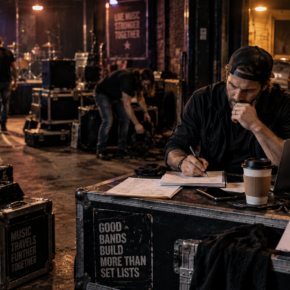
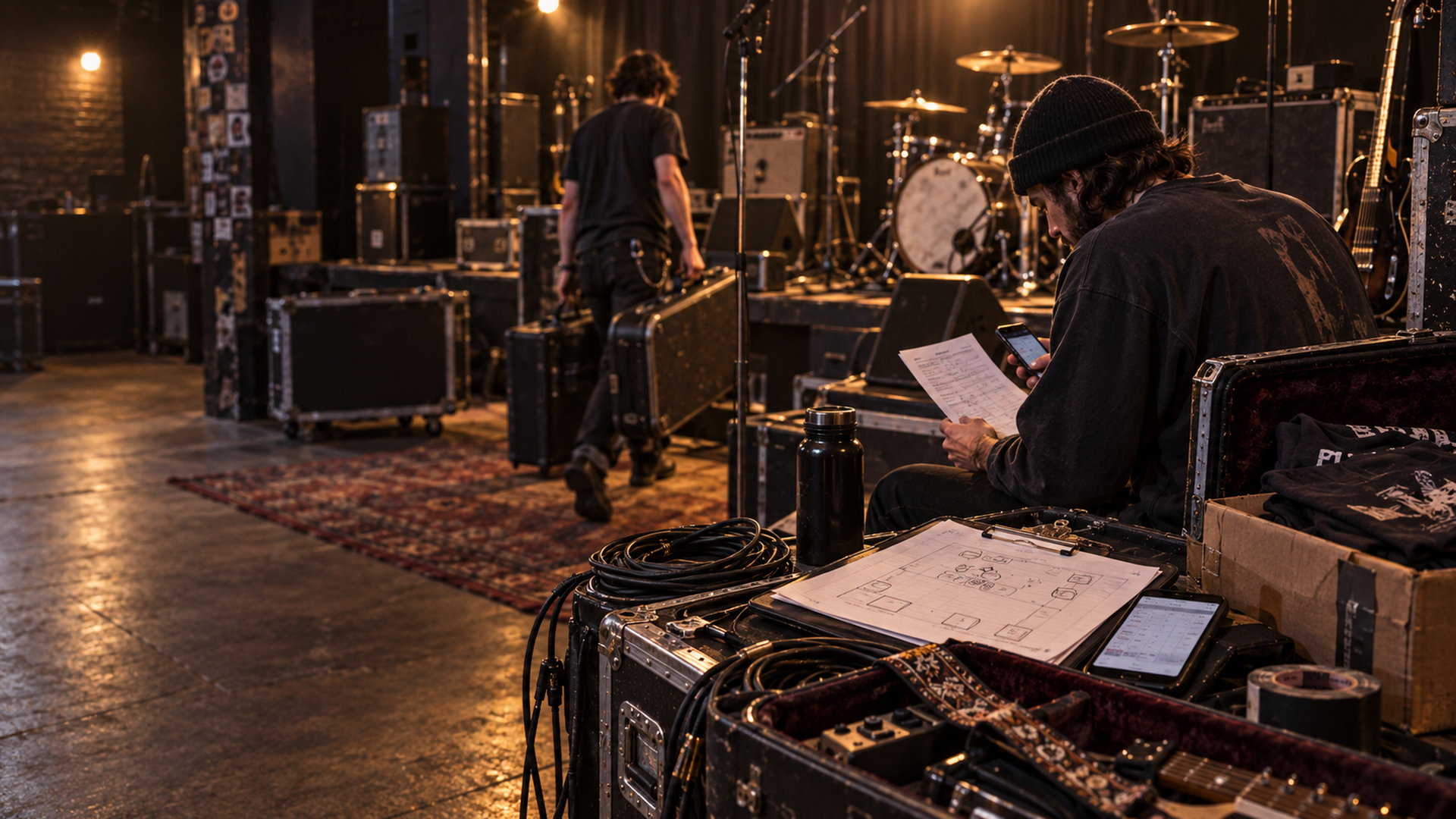
One member of the band gets to the venue at 6:30. He unloads the PA, finds power, runs cables, gets the stage laid out, discovers the left monitor suddenly hates everybody, talks to the manager, fixes whatever worked perfectly yesterday and somehow stopped working during the drive over.
At 8:40, another member walks in carrying a guitar.
Everybody plays the same show. Three hours later, the last song ends. Guitar goes into the case, somebody says, “Good gig, boys,” and half the band disappears while the same guy who built the stage starts tearing it back down.
Here is the quiet part:
You played the same gig. You did not necessarily work the same gig.
The audience only sees the middle
Musicians tend to measure the work by the part happening under the lights because that is the part everybody sees. But the actual job begins long before the first count-off and, for somebody, usually ends long after the crowd leaves.
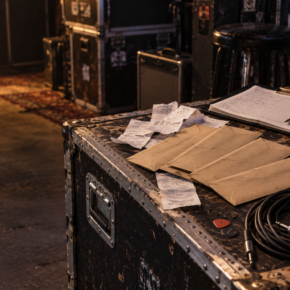
Somebody advanced the show. Somebody coordinated arrival times. Somebody loaded equipment. Somebody drove the trailer. Somebody set up production. Somebody handled merch. Somebody ran soundcheck. Somebody solved the problem with the bad cable. Somebody made sure the money ended up where it was supposed to go.
Sometimes those are several different people.
Sometimes they are all the same person.
That difference matters because invisible work has a nasty habit of becoming invisible resentment.
Resentment usually looks like something smaller
Bands rarely blow up because of the actual thing they appear to be arguing about.
It looks like the fight is about a speaker stand. In reality, it is about the last fifty speaker stands.
Somebody finally says, “Could one of you guys help load this stuff?” The other guy says, “You never asked.” Now everybody is angry.
PA Guy thinks, “I should not have to ask.” Guitar Guy thinks, “I honestly thought you had a system.”
Again… both may be telling the truth.
People fall into routines. One person always handles something, so everybody else begins treating it like his job. He assumes everybody knows he hates doing it alone. They assume that if he needed help he would say something. Nobody actually talks about it, and six months later somebody gets called an asshole over a subwoofer.
That is how a lot of band problems work.
This is not automatically an argument about equal pay
I am not going to tell every band that extra load-in time means a different pay split. There are too many kinds of bands and too many kinds of gigs for one answer to make sense.
Some bands own production together. Some hire sound. Some have one member who provides equipment. Some musicians are partners. Some are hired players. Some shows require almost nothing. Others require dragging enough equipment into a room to launch a small invasion.
The point is not that one system is always fair. The point is that you cannot decide what fair means until everybody recognizes the work that is actually being done.
Maybe the person who leaves first also spent four hours during the week editing video and promoting the show. Great. That belongs in the conversation too. The goal is not to make everybody wrap the same number of cables. The goal is to stop pretending the three hours onstage are the only hours that count.
Map the real gig
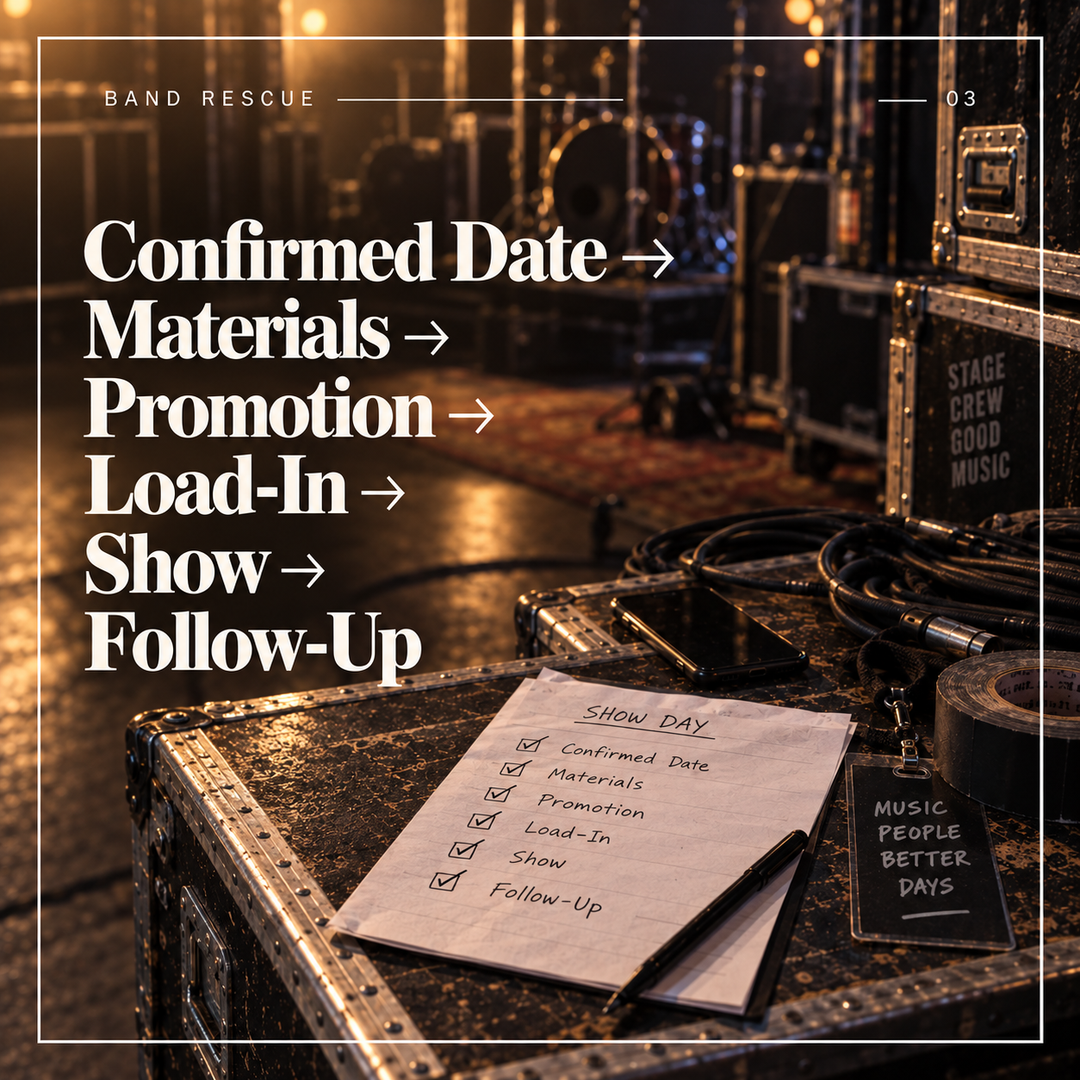
If this is becoming a problem in your band, do something simple. Write down what actually happens around one of your shows.
Who confirms the date? Who advances it? Who loads the equipment? Who drives? Who arrives early? Who sets up? Who runs soundcheck? Who handles merch? Who tears down? Who stores the gear? Who gets home last?
Now look at the list.
You may find the work is already divided more evenly than people realized. You may also discover one person is quietly carrying half the operation.
Once you can see the work, you can divide it intelligently.
Maybe everybody helps with load-in and load-out. Maybe jobs rotate. Maybe production responsibility is compensated differently. Maybe equal pay still makes sense because other members carry different responsibilities somewhere else.
Any of those can work when everybody understands what the arrangement is.
Professional does not have to mean complicated
You do not need a laminated operations manual hanging inside the trailer.
If you are consistently the first person out the door while somebody else is still working, look around before you leave and ask, “You good?”
That one question fixes more than you would think.
And if you are the person always carrying the extra work, stop silently collecting resentment like reward points. Tell people what you need. “Nobody ever helps” is not nearly as useful as, “Can you take the left side of the stage tonight?”
Specific jobs are easier to share than vague frustration.
The gig starts before you get there, and for somebody it usually ends after you leave. A good band knows who those people are.
A better band makes sure the same person does not have to carry all of it forever.
Next in Band Rescue: Everybody Wants to Get Paid. Who Got You Paid?