
Somewhere in the life of almost every working band, there is a point where everybody has to decide what this thing actually is.
Maybe it started with friends playing songs. Somebody got offered a gig. Then another one. Somebody made a Facebook page. Somebody designed a logo. People started recognizing the name. The calendar got busier. Money started coming in and going out. Venues started expecting answers. Suddenly there was promotion, production, merch, scheduling and a dozen other jobs attached to something that originally began with people making music in a room.
Somewhere along the way, the band became an operation.
The problem is nobody necessarily noticed when it happened.
Being in the band is not the same as building it
If you learn the songs, show up prepared and play your ass off, you are doing something important. I do not want to minimize that. A band full of fantastic businessmen who cannot play is not getting very far either.
The music matters. Rehearsal matters. The show matters.
But those things make you a musician in the band.
Building a sustainable band adds another question: What are you contributing to the thing around the music?
That is what this whole series has really been about. Not making everybody do the same job. Not deciding the bandleader is always right. Not deciding the other musicians are lazy. Not turning a band into a corporate org chart.
It is about deciding whether everybody who expects to benefit from the band is an active participant in building it.
Commit
Start by deciding what you are actually pursuing.
This sounds obvious until you put five musicians in the same room and ask where they think the band should be in two years.
One person wants to tour. One wants two Saturday gigs a month. One wants to make records. One wants extra money. One wants to get national attention. One mostly wants to play with his friends and get out of the house once in a while.
None of those answers are automatically wrong.
They are also not the same goal.
You cannot build effectively together if nobody has agreed on what is being built. Commitment begins with being honest about what this is, what you want it to become and what each person is realistically willing to put into getting there.
Activate
Then do something.
This is where bands can live for years: everybody is committed emotionally. Everybody talks about the next level. Everybody wants better gigs, better money, more followers, bigger crowds, a record, a tour.
Okay.
What happened this week?
Did somebody contact venues? Did somebody put useful content together? Did somebody update the website? Did somebody repair the merch table before the next show? Did somebody follow up with the photographer? Did somebody organize the mailing list? Did somebody help unload the trailer?
Careers are built out of a shocking amount of unglamorous work.
Activation is where wanting something turns into doing something.
Live It
If you say you want professional opportunities, start operating professionally before they arrive.
Answer people. Be on time. Keep the materials current. Know the songs. Promote the show. Take care of relationships. Make it easy for a buyer to work with you. Make it easy for the rest of the band to depend on you.
Professional does not mean corporate, stiff or boring. God knows music does not need more of that.
It means dependable.
It means behaving in a way that allows somebody else to safely bet a night, a room, some money or his own reputation on your band.
Create
Then the band stops waiting for somebody else to manufacture its future.
You create audience. You create relationships. You create opportunities. You create momentum. And yes, you create the music that all of this is supposed to support in the first place.
The difference is that now there is something underneath the music capable of carrying it somewhere.
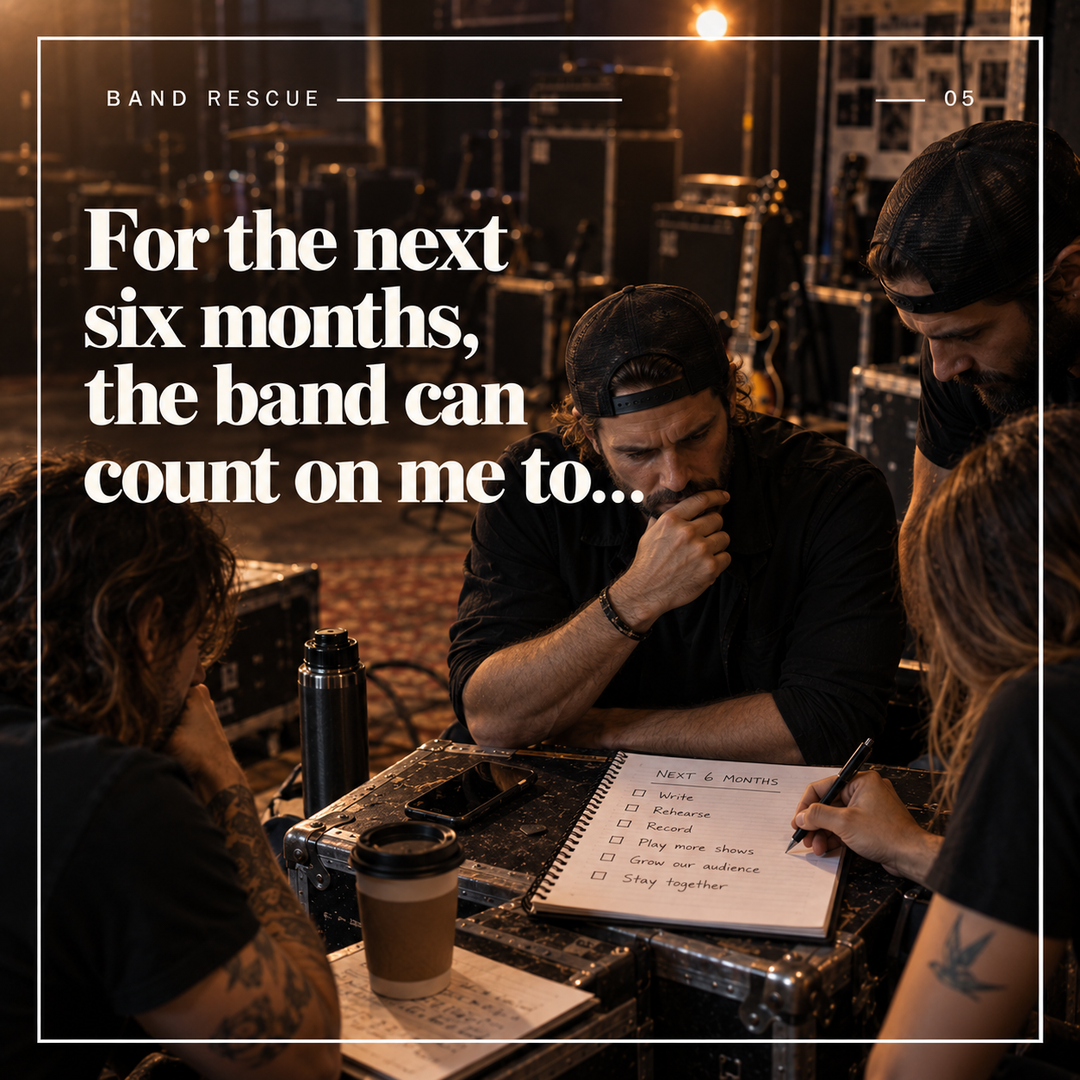
Where will this band be six months from now?
That question is easy to answer with hopes.
“Bigger rooms.”
“Better money.”
“More people.”
“Maybe start touring.”
Fine. Now take the instruments out of the room for a minute.
Pretend nobody gets credit simply for playing. Go around the room and ask what each person is actually contributing to building the band between now and six months from now.
Booking? Promotion? Equipment? Networking? Merch? Content? Production? Administration? Relationships?
Something?
Not what somebody could do. Not what they have been meaning to start doing. What do they actually own?
If everybody has an answer, you are probably in pretty good shape.
If only one person has an answer… well, now you know what the next band meeting needs to be about.
This is not always a lazy-musician problem
Maybe nobody ever asked for help. Maybe the responsibilities were never defined. Maybe the person carrying everything never gave anybody else room to participate. Maybe some members really are there only to play, and everybody is perfectly happy with that arrangement.
All of those situations can work if the arrangement is clear.
The problems start when five people expect partnership while only one or two people are operating like partners.
That is when money feels unfair. Decisions feel unfair. Somebody burns out. Somebody starts asking, “Why am I doing all of this?” and somebody else honestly answers, “I did not know you needed help.”
That conversation can wreck a band.
Or it can finally fix one.
So… are you actually a band?
That was the question we started with.
Not whether you share a stage. Not whether the logo has everybody’s name in it. Not whether you have been together for six months or fifteen years.
Are you actually building something together?
Before you tell everybody else what needs to change, ask yourself the question first:
What am I personally doing to help build this band?
If everybody in the room has a real answer, you probably have a band.
If they do not, at least now you have the right conversation to start.
Band Rescue: Keep learning. Keep talking about the parts of the work nobody talks about until they become a problem.